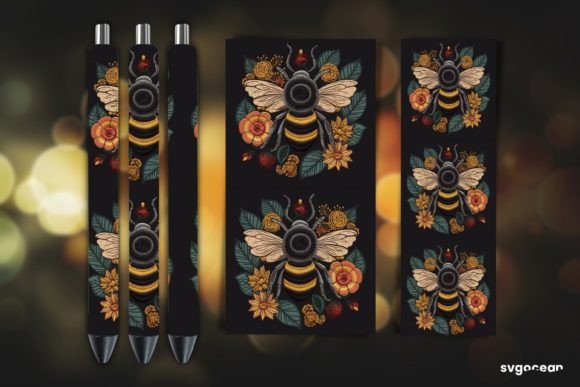
Reviewing Embroidery Bee Pen Wrap Sublimation for Merch
As an embroidery designer who has spent years digitizing logos and refining stitch paths for small businesses, I approach every new machine embroidery design with a critical eye. It is not just about whether a motif looks cute on a screen; it is about how it translates to fabric, how it holds up in the wash, and how it elevates a brand’s perceived value. Recently, I evaluated Embroidery Bee Pen Wrap Sublimation, a digital asset categorized under Crafts and Graphics, to determine its viability for commercial use. This review focuses on its application for branded merchandise, patches, and uniform accents for small business owners.
First Impressions and Visual Personality
The initial appeal of Embroidery Bee Pen Wrap Sublimation lies in its versatility. The title suggests a fusion of traditional embroidery aesthetics with modern sublimation-ready graphics, which is a trending niche in the handmade market. Upon reviewing the provided files, the design feels professional yet approachable. It strikes a balance between playful and premium, making it suitable for a wide range of industries. For a boutique coffee shop, a floral studio, or a local bakery, this design offers a friendly visual identity that does not sacrifice elegance.
The inclusion of high-resolution PNG files (450x1425 px and 750x1500 px at 300 DPI) indicates that the creator understands the need for crisp edges in printable mockups. While these are graphic files rather than native embroidery formats like DST or PES, they serve as excellent references for digitizers or for direct sublimation printing on polyester blends. For those looking to create a cohesive look across both printed and stitched items, this dual-purpose nature is a significant advantage.
Real-World Applications for Small Business Merch
When considering Embroidery Bee Pen Wrap Sublimation for small business merch, the possibilities extend far beyond simple decoration. Here is how I envision this design performing in real-world scenarios:
- Branded Patches: The dimensions provided suggest a vertical orientation, which is ideal for sleeve patches or back-of-jacket accents. An embroidered patch featuring this bee motif can become a signature element for staff uniforms, creating instant brand recognition.
- Apron Embroidery: For artisans, bakers, and florists, aprons are walking billboards. Placing this design on the chest pocket or lower hem adds a touch of professionalism. The bee symbol often connotes hard work and community, aligning perfectly with the ethos of handmade brands.
- Cap Embroidery: While the vertical format requires careful placement, it can work beautifully on the side panel of a trucker cap or as a smaller accent on the front left chest of a baseball cap. This subtle branding often appeals more to customers than large, aggressive logos.
- Tote Bag Design: Canvas tote bags are staples for Etsy sellers and retail shops. Using this graphic for sublimation or as a guide for machine embroidery can turn a generic bag into a desirable handmade product that customers are proud to carry.
Technical Considerations and Production Notes
Before running a production batch, there are critical technical factors to address. Since the product description specifies PNG files rather than a native embroidery file, users must understand the workflow. If you are sublimating, ensure your fabric has a high polyester content for vibrant color retention. If you are using this as a reference for machine embroidery, you will need to digitize the image or hire a digitizer.
Here are my practical notes for ensuring a high-quality finished product:
- Test in Black and White: Before committing to thread colors, print the design in grayscale. This helps you evaluate contrast and ensure that fine details do not get lost, especially if the design will be used on dark uniforms.
- Check Stitch Density and Spacing: If digitizing, pay close attention to stitch density. Bees often have intricate wings and stripes. If the stitches are too dense, the fabric may pucker; if too sparse, the backing may show through. Ensure there is adequate spacing between elements to prevent thread breaks.
- Fabric Texture and Stabilizer: Always test on the actual fabric you intend to use. Textured fabrics like canvas or terry cloth require different stabilizers than smooth cotton poplin. Use a cut-away stabilizer for garments that will undergo frequent washing to maintain shape.
- Hoop Size Constraints: Verify that the design fits within your machine’s hoop size. The aspect ratio of 450x1425 pixels suggests a long, narrow design. Ensure your hoop can accommodate this height without requiring complex re-hooping techniques that might misalign the pattern.
Impact on Brand Identity and Customer Trust
In the competitive landscape of custom apparel and handmade goods, consistency is key. Embroidery Bee Pen Wrap Sublimation can serve as a cornerstone for visual consistency. When customers see the same high-quality bee motif on your packaging, your staff’s aprons, and your social media printable mockups, it builds trust. It signals that you pay attention to detail.
Moreover, using professional-grade design assets elevates the perceived value of your products. A well-executed embroidered patch on a tote bag justifies a higher price point than a plain bag. It transforms a utility item into a piece of commercial embroidery art. For Etsy sellers, this differentiation is crucial for standing out in a saturated market.
Where to Use Caution
While versatile, this design is not without its limitations. Avoid using it on very small areas where detail loss is inevitable, such as tiny hat fronts or narrow collar tags. The intricate nature of a bee design may blur if scaled down too aggressively. Additionally, be cautious with high-pile fabrics like fleece, where small stitches can get lost in the texture. Always create a physical sample before approving a large run for client orders.
Final Verdict for Crafters and Designers
Embroidery Bee Pen Wrap Sublimation is a valuable addition to the toolkit of any designer focusing on Crafts and Graphics. It offers a blend of aesthetic charm and practical utility. However, because it comes as a ZIP file with PNGs, it requires an extra step for machine embroiderers. Ensure you check the licensing terms included in the ZIP file to confirm commercial embroidery rights. If you are prepared to handle the digitization or sublimation process correctly, this design can significantly enhance your brand’s merchandise lineup, offering a professional, cohesive look that resonates with customers.
For those ready to expand their product line, I recommend starting with a small batch of aprons or tote bags to test the market response. The bee motif is timeless, and when executed with precision, it becomes more than just a logo—it becomes a symbol of your brand’s commitment to quality and craft.